


I. INTRODUCTION
Insects play an important role in agriculture. Thanks to butterflies and bees that help pollinate crops, ants destroy sucking aphids, spiders often spread nets to catch insects that bite leaves… However, there are also many species of insects that are harmful to crops, causing damage to the quality of agricultural products as well as reducing crop yields.
The article summarizes research and studies from other countries as well as in Vietnam, some common types of harmful insects on pepper plants. Thereby helping farmers to have effective preventive measures.
1. LONG-HEADED BUG OR STEM BORER.
1.1. Symptoms:
Long-headed bugs lay eggs in the axils of buds, the larvae hatch and cause wilting of leaves and flowers. The entire upper part of the pepper branch will break down and die. The fruit is damaged, falls prematurely and does not reach normal size.
The female lays eggs in the tissue and produces dark to black spots within a few hours.
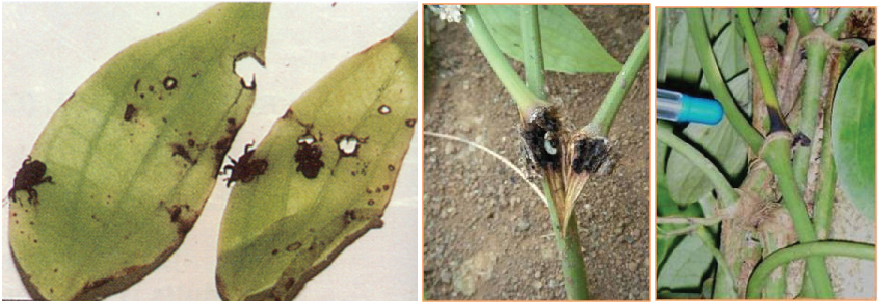
Hình 1: Côn trùng cắn trên lá Hình 2: Ấu trùng tấn công thân tiêu Hình 3: Màu đen trên thân do côn
trùng phá hoại
1.2 Cause:
Caused by Lophobaris piperis, commonly known as the long-headed beetle.
L. piperis lays eggs in damaged tissues. The eggs are small, white and oval, measuring about 0.8 mm and can be observed below the epidermis.
Each female lays about 200 eggs in her lifetime. After 3-6 days, the eggs hatch into larvae and develop inside the stem.
The adults will emerge from the holes within 2-3 days and their life span lasts up to 1.5 years.
The adults are small black beetles 3-5 mm and feed on branches and young shoots.
2. MEAPHS
2.1 Symptoms
Pepper roots are bitten, leading to yellow leaves. If good management measures are not taken, the plant will gradually decline and die. Mealybug colonies can be observed on roots and underground
The combination of mealybugs (Planococcus spp.) and plant parasitic nematodes (Radopholus similis and Meloidogyne incognita) accelerates the decline of pepper plants.
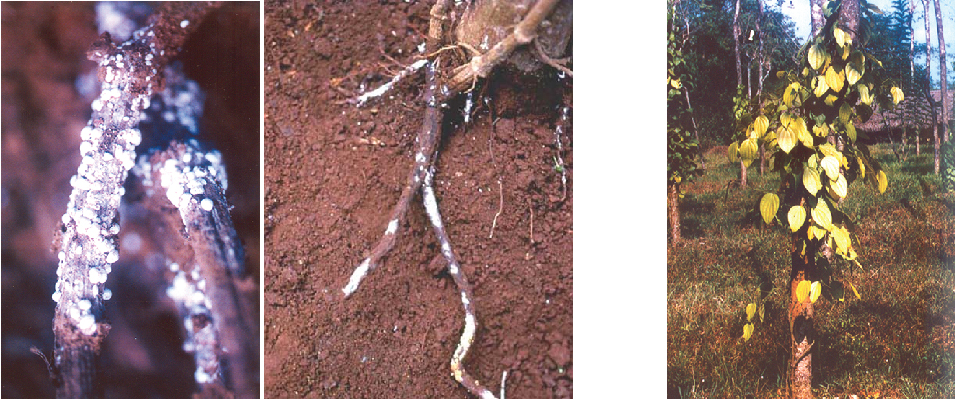
Hình 4: Rệp sáp bám trên rễ tiêu Hình 5: Cây tiêu bị vàng do rệp sáp
2.2 Causes
Caused by mealybugs (Planococcus spp.) that live in the soil and bite the roots. Mealybugs are oval-shaped, have soft bodies covered with waxy white fibers, and have a life cycle of about 25 days.
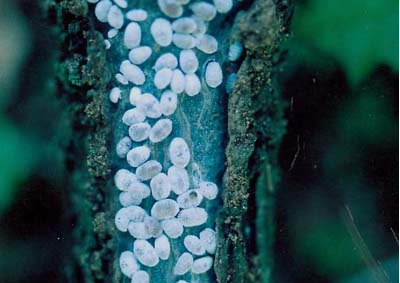
Hình 6: Rệp sáp trên rễ tiêu
3. MOSQUITO BUG
3.1 Symptoms
Flowers and young fruits are bitten, losing productivity
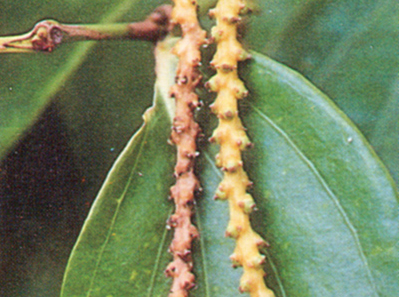
Hình 7: Tác hại của bọ xít muỗi lên hoa
3.2 Causes
Due to the mosquito bug (Diconocoris hewetti and D. distanti).
Large black larvae, with lace like wings. Size 4.5×3 mm. Larvae have spines all over the body.
Egg and larva life span 10-19 days. Adult life span 27 days.
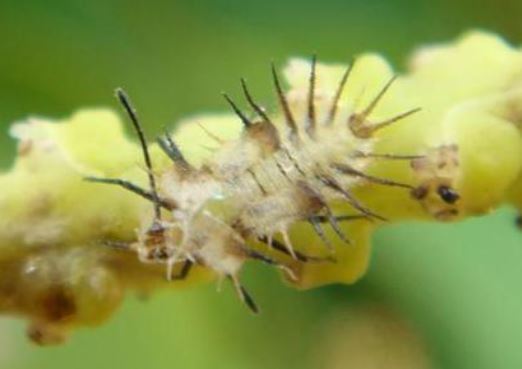
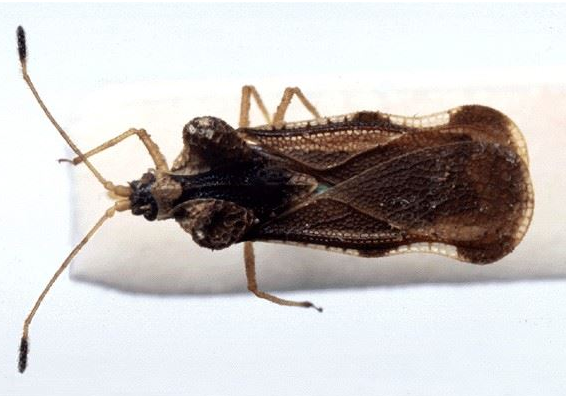
Hình 8: Ấu trùng Diconocoris hewetti Hình 9:Diconocoris hewetti trưởng thành
4. LEAF BUG OR POLLU BEETLE
4.1 Symptoms
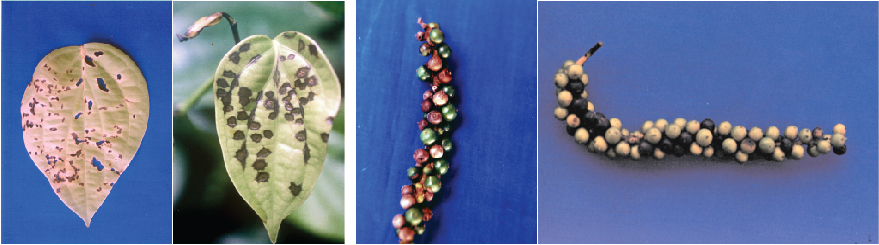
Hình 10: POLLU gây hại trên lá tiêu Hình 11: POLLU gây hại trên trái tiêu
Young leaves and skin of pepper have dark brown spots. Females lay eggs on soft tissues and fruits, when the larvae hatch, they bite the tissues and cause infection and create black wounds. Then the tissues and fruits are crushed.
4.2 Causes
Due to the POLLU beetle (Longitarsus nigripennis, Aspidiotus destructor or Pinnaspis strachini) which is small black, about 2.5 mm x 1.5 mm in size when mature. The head and thorax are pale yellowish brown and the forewings are black. The eggs hatch in 5-8 days and the larvae live in the fruit. Fully developed larvae are creamy white, 5 mm long. The larval stage is about 20-30 days.
5. SCALE APHYSICS
5.1 Symptoms
Layers, scales with hard shells cover the main stem of young pepper vines, on mature leaves and fruits. Leaves become yellow and dry, young pepper vines die gradually and older pepper vines droop and dry.
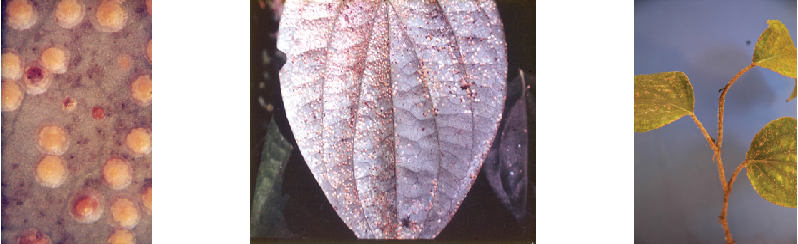
Hình 12: Rệp vảy Hình 13:Rệp vảy làm lá bị khô Hình 14: Rệp vảy trên lá và chồi non
5.2 Causes
Due to the scale (Lepidosaphes piperis), which is about 1 mm long, round brown and black. The scales are permanently fixed on the surface of the leaves or stems, fruits and have little movement.
6. THRIPS
6.1 Symptoms
The leaf margins curl downwards and inwards, leading to the formation of leaf margin galls. The wounds create opportunities for bacterial infection and become more wrinkled. Damaged leaves lead to reduced photosynthesis and affect the growth of the plant.
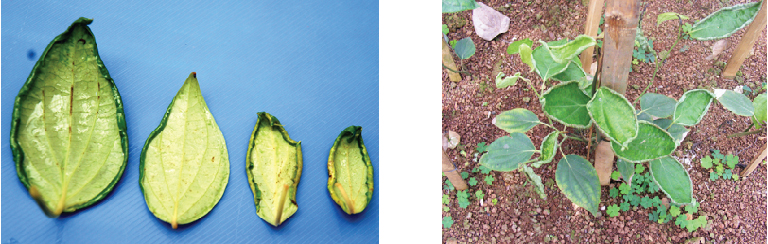
Hình 15: Lá bị bọ trĩ Hình 16: Cây tiêu bị bọ trĩ
6.2 Causes
Caused by thrips (Liothrips karnyi), adults are black and 2.5-3.0 mm long. Thrips lay eggs on leaves and create galls, after 6-8 days the eggs hatch into creamy white larvae. The life cycle of thrips is about 18-27 days.
II.BIOLOGICAL CONTROL MEASURES
1. Beauveria bassiana (Bb) also known as white gang, Metarhizium anisopliae (Ma) also known as green gang is a parasitic fungus on some insects. Often used as a biological control agent. The spores of the fungus will germinate and attack the chitinous shell of the insect, then the fungus secretes toxins to decompose or kill the insect.
2. Neem oil: contains the active ingredient Azadirachtin, which causes anorexia in insects, and is also used to control nematodes and some fungi that cause diseases on crops as well as on pepper plants. Spraying natural products with 0.3% Neem oil about every two weeks is highly effective for insect management.
3. Natural enemies:
a. Parasitic wasps (Spathius piperis) control the density of long-headed beetle larvae by up to 37%.
b. POLLU beetles (Aspidiotus destructor) are controlled by ladybugs Chilocorus circumdatus …
Insects bite and damage roots, stems, leaves and fruits, and are also the cause of spreading plant diseases caused by viruses, leading to reduced productivity and quality and causing billions of dong in damage to farmers. Therefore, it is necessary to pay attention to insect pest management by biological measures to reduce damage and help increase productivity and quality of agricultural products.





 Users Today : 2
 Users Yesterday : 31
 Users Last 7 days : 167
 Users Last 30 days : 646
 Users This Month : 454
 Users This Year : 5274